
Agentic AI: Building Intelligent Workflows [Guide]

AI agents are everywhere in conversations lately, and for good reason. Today, I’m excited to dive into this groundbreaking innovation: agentic workflows.
My personal interest in agentic workflows has grown in recent months, due in large part to a few articles I’ve written recently. One was a piece evaluating the real-world efficacy of AI agents (ChatDev, SWE-Agent, and Devin). The second was a deep dive into Devin AI, the tool I found most compelling from my initial research.
So, why are AI agents so fascinating to me? Unlike tools like ChatGPT, which follow a straightforward prompt-and-reply interaction model, AI agents are designed for more dynamic and context-aware engagement. Not only do they understand the broader context of a task, but can also plan strategies, critique their own outputs, and adapt their responses to user inputs in real time.
While this method of interaction is compelling on its own, I wanted to push the boundaries further and explore how agentic workflows can be used to create specialized AI tools. Tools capable of integrating with systems across your tech stack, perform complex, multi-step tasks, and deliver results that are ultimately more powerful than what traditional AI can achieve.
So, what exactly sets AI agentic workflows apart, and how do we go about building one? In this article, I’ll break down the key advancements that made agentic workflows possible, explore their real-world potential, and provide practical insights into how you can create and leverage these systems.
Table Of Contents
- Key AI Advancements That Led to Agentic AI
- Three Key Characteristics of AI Agentic Workflows
- The Problem With Traditional AI Tools: Zero-Shot Prompting
- Building an AI Agent: Key Design Patterns
- Retrieval-Augmented Generation (RAG) and AI Agentic Workflows
- Building an Agentic Workflow: Tech Stack and Key Components
- Challenges and Considerations of AI Agentic Workflows
Key AI Advancements That Led to Agentic AI
To me, the current AI revolution feels a lot like the JavaScript framework gold rush of the mid-2010s. It felt like new tools and concepts were popping up daily, each claiming to redefine the game. What we didn’t always see then, however, was the years of innovation and behind-the-scenes experimentation that made these new JS frameworks possible.
The same thing is true today. AI agents haven’t evolved out of nowhere – there were some key innovations that enabled us to get where we are.

In my opinion, these are the three main advancements that made agentic workflows possible:
- Progress in Large Language Models (LLMs): Models like GPT-4 and others have demonstrated an impressive ability to understand and generate text with depth and context, becoming foundational pillars for more sophisticated workflows.
- Integration of AI with Robotic Process Automation (RPA): The combination of AI and RPA enables autonomous systems to execute complex tasks, connecting with various tools and systems to make informed decisions.
- AI Systems with Autonomous Decision-Making: Advanced technologies like AutoGPT are now capable of evaluating scenarios, planning actions, and executing decisions without the need for direct human intervention, significantly expanding their impact.
Setting the Stage for The Next Revolution in AI: Agentic Workflows
Today, startups and large companies alike are pouring resources into AI agentic workflows, creating increasingly specialized AI systems in areas like healthcare and education. Agentic workflows are already automating complex, iterative tasks across sectors.
It’s now possible to envision automating an ever-growing range of “behind-the-scenes” tasks, making previously out-of-reach goals feel achievable. This could be anything from enabling faster, more accurate medical diagnoses to building a pair programmer that enhances developer productivity.
To me, this new approach isn’t just an improvement — it’s another revolution that redefines what we thought was possible with AI, coming right on the heels of the AI revolution we just had.
If this feels a little bit cloudy right now, don’t worry. I’ll try to explain in more detail everything that I’ve discovered during my research into this technology.
Three Key Characteristics of AI Agentic Workflows
Agentic workflows represent a transformative approach to AI, shifting from simple task execution to systems capable of dynamic interaction, reflection, and proactive decision-making. Unlike traditional methods, such as zero-shot prompting (more on this soon), these workflows empower AI to intelligently integrate with external tools, adapt to new challenges, and tackle complex, multi-step tasks with precision. This shift expands the boundaries of what AI can achieve, making it a collaborative partner rather than just a tool.
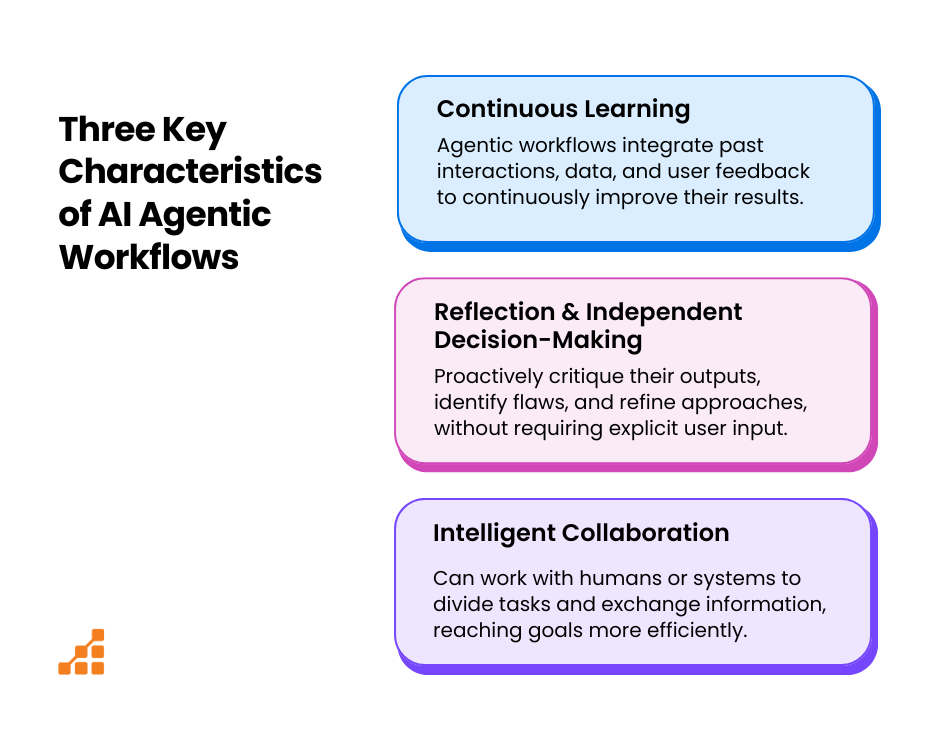
At their core, agentic workflows are defined by three key traits: continuous learning, reflection and independent decision-making, and intelligent collaboration.
Trait 1. Continuous Learning and Iterative Improvements
Agentic workflows aren’t limited to what they’ve been told in a single interaction. Rather, they learn from past interactions, data they’ve accessed and user feedback, continuously adjusting their strategies and improving their results. Devin AI, the “AI Software Developer,” is an example of this. Devin can integrate with a GitHub repo, keeping its knowledge of your project up to date by tracking commits and even making new commits when necessary.
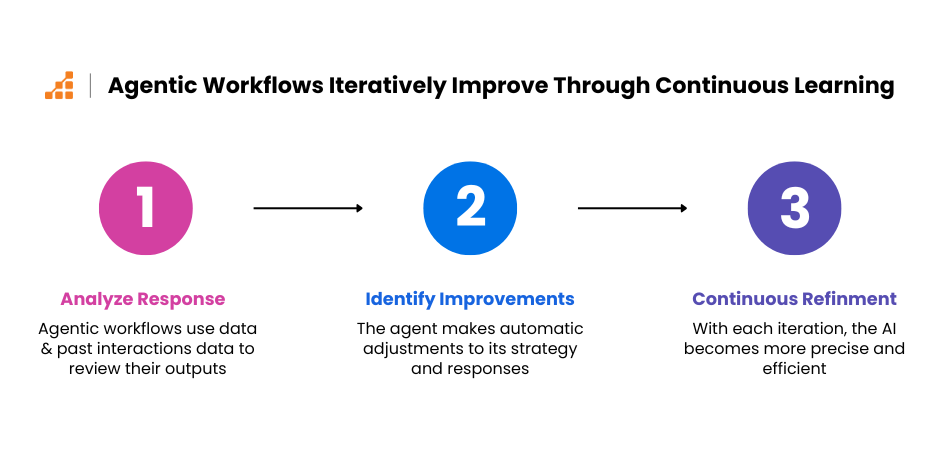
Instead of producing a single, static response, AI follows an iterative cycle. This brings a few major advantages:
- Data-Driven Adjustments: The agent continuously reviews the outcomes of its actions and makes automatic adjustments to improve its efficiency.
- Progressive Improvement: with each iteration, the AI becomes more precise and efficient, significantly increasing the quality of the final output.
Additionally, ongoing interaction with the user allows the AI to learn specific patterns, preferences, and needs, delivering increasingly tailored solutions.
Trait 2. Reflection and Independent Decision-Making
Agentic workflows go beyond responding to user prompts—they autonomously analyze the quality of their actions and refine their approaches without requiring explicit user input. Put simply, these systems can effectively “think” about their choices, proactively critiquing their outputs, identifying flaws, and making improvements before presenting them to a human. Unlike tools like ChatGPT, which can remember preferences or provide alternative answers when asked, agentic workflows take initiative. They independently decide when refinement is needed, adapt based on feedback loops, and adjust their processes dynamically, all without relying solely on user direction. This independence enables them to handle complex, multi-step tasks with greater accuracy and efficiency.

Trait 3. Intelligent Collaboration
In complex scenarios, agentic workflows can work alongside other systems or even humans, exchanging information and dividing tasks to reach goals more efficiently.
If we again consider Devin, we can immediately see how this works: the user can track what Devin is doing in real time. You can see the code editor it’s using as well as the browser if it’s working on a web application. And here’s the best part of the collaboration – you can interact with Devin at any moment, and it will adapt its workflow to accommodate your requests or feedback seamlessly.
In general, these workflows have the unique ability to understand context, even when instructions are ambiguous or poorly formulated, adjusting their responses effectively and proactively. This approach not only expands AI’s capabilities, but also redefines what we expect from it in terms of efficiency and impact.
So, how do agentic workflows compare in the real world with traditional AI tools like ChatGPT? We’ll explore this next.
The Problem With Traditional AI Tools: Zero-Shot Prompting
If you’ve ever used ChatGPT to solve a coding challenge, you’ve undoubtedly noticed some of the limitations of this method of interaction. During a lengthy chat, for example, ChatGPT will “forget” earlier parts of a conversation. Errors accumulate, and multi-step reasoning is basically out of the question. That’s largely because you’re interacting with ChatGPT using a method known as “zero-shot prompting.”
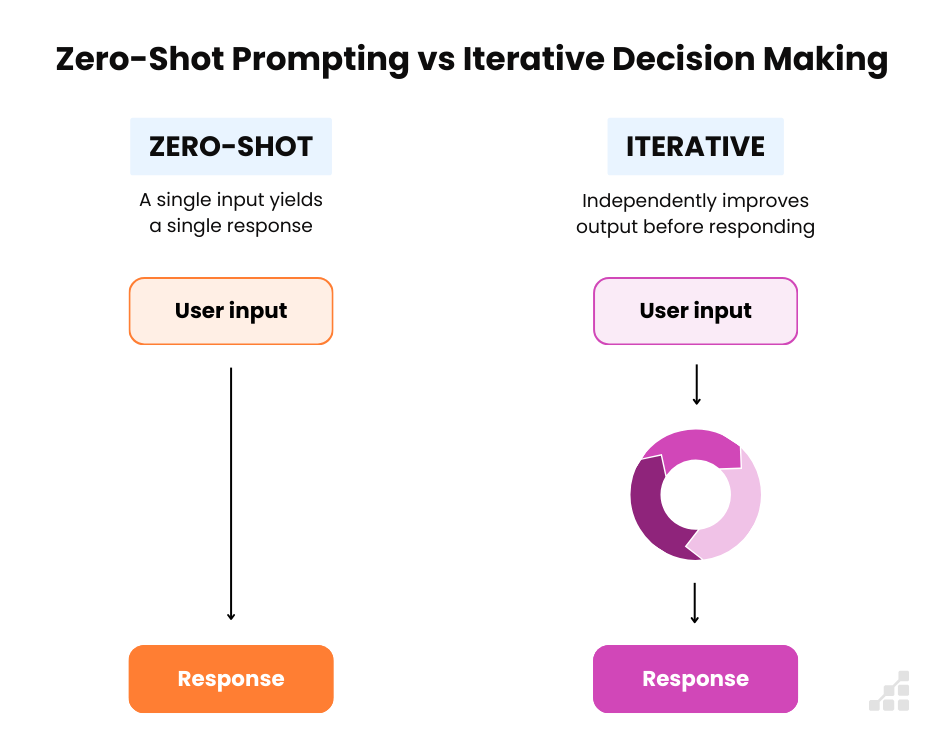
In this method of interaction, a single instruction yields a static response. The model must interpret and respond to a singular instruction. That means zero-shot prompting is highly dependent on the quality of your prompt: how it’s structured, how clear it is, and even tiny changes in phrasing.
Because ChatGPT can struggle with ambiguity, the output could miss the mark, especially if your prompts are less-than-great. What’s more, it won’t ask clarifying questions if the prompt is unclear. Instead, ChatGPT will just take its best guess.
Let’s use an example to illustrate the advantages of agentic workflows over traditional prompt-and-reply methods.
Iterative Decision-Making in Action: Travel Planning Example
Using LangGraph, let’s consider a scenario where we have a travel agentic workflow. The image below visualizes this – showing how we can define the nodes, what each node can do, and how they interact with each other:
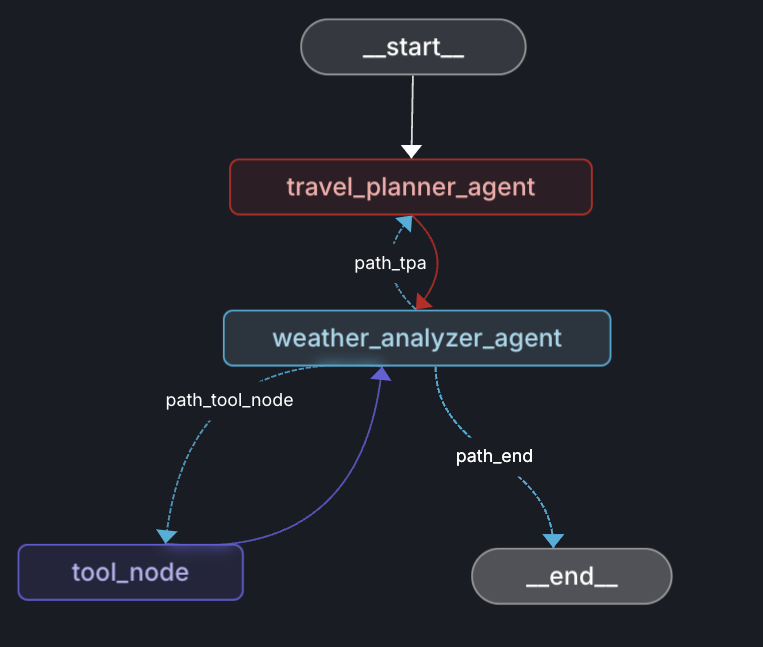
Let’s break this image down into its steps:
- The Start node represents the user’s initial prompt, which is passed to the first agent (the travel_planner_agent).
- The first agent will generate a travel itinerary, then pass it to a second agent, which will analyze the dates and locations, checking compatibility with local weather conditions.
- If the weather doesn’t look good, the weather agent informs the itinerary agent that adjustments are needed.
- The planning agent then revises the itinerary based on this feedback, and the process repeats.
This loop may happen several times until the workflow is satisfied with the result—specifically, until the itinerary is approved by the weather analysis agent. Finally, the flow reaches the End node, providing the user with the finalized itinerary.
In this scenario, you can see how the agent is capable of revisiting, adjusting, and improving the final suggestion based on the feedback of the flow and external tools.
Building an AI Agent: Key Design Patterns
I love exploring the theoretical foundations of the technologies I use daily, but what excites me more is going beyond theory to get hands-on. I’m interested in understanding how big tech and startups build agentic workflows—what technologies they use, best practices, design patterns, and how to make these systems production-ready.
In this section, I’ll focus on the key design patterns we see when creating AI agents. Design patterns, as you most likely know, are solutions to common software design problems. Put simply, they are blueprints that can be customized for specific challenges.
For AI agentic workflows, there are four main design patterns: reflection, tool usage, planning, and multi-agent collaboration. Let’s dive into each of these in more detail.
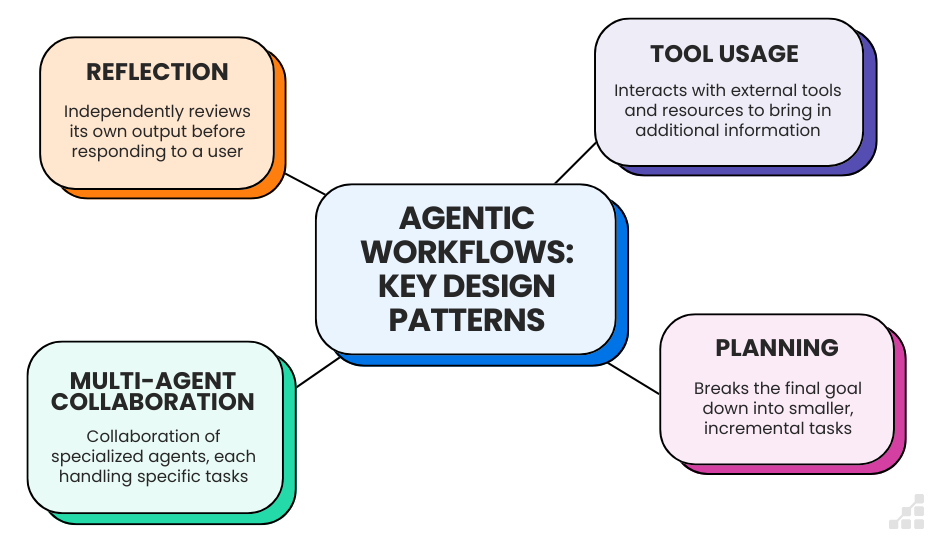
Design Pattern 1: Reflection
In this pattern, an AI agent generates a response to an initial prompt and then reviews its own output before presenting it to the user. This self-evaluation process involves prompting the LLM to critique and refine its work, improving accuracy and removing nonsensical or incorrect information.
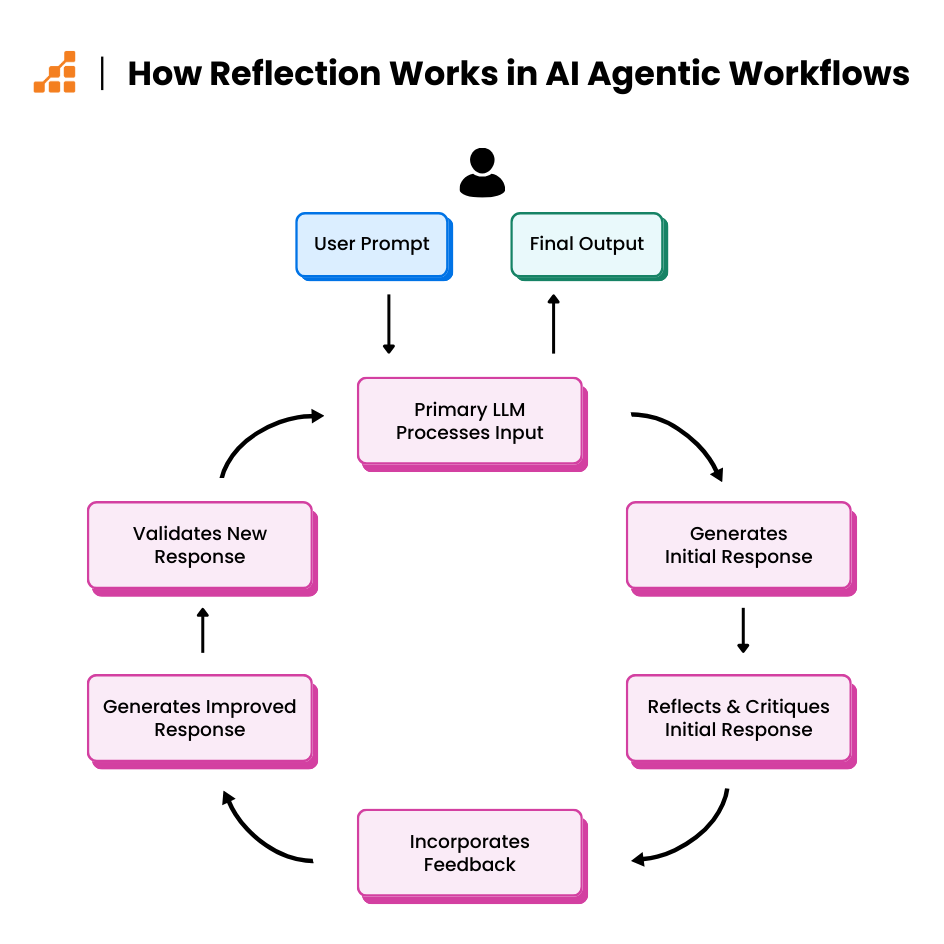
The advantage over ChatGPT is clear. If you ask ChatGPT to review its own output, the result is often underwhelming because it’s not truly engaging in a recursive process—it’s merely responding to your new query without deeper self-evaluation.
Although this is actually a relatively simple pattern to implement, its efficiency is remarkable compared to zero-shot prompting, and it ends up saving a lot of time.
If you want to read more about this pattern, here are two interesting studies on the topic:
- “Self-Refine: Iterative Refinement with Self-Feedback,” Madaan et al. (2023)
- “Reflexion: Language Agents with Verbal Reinforcement Learning,” Shinn et al. (2023)
Design Pattern 2: Tool Usage
The tool usage pattern is what enables LLMs to interact with external tools and resources. This could be anything from local weather to real-time currency exchanges – essentially, anything external to the LLM that could bring in additional data or information.
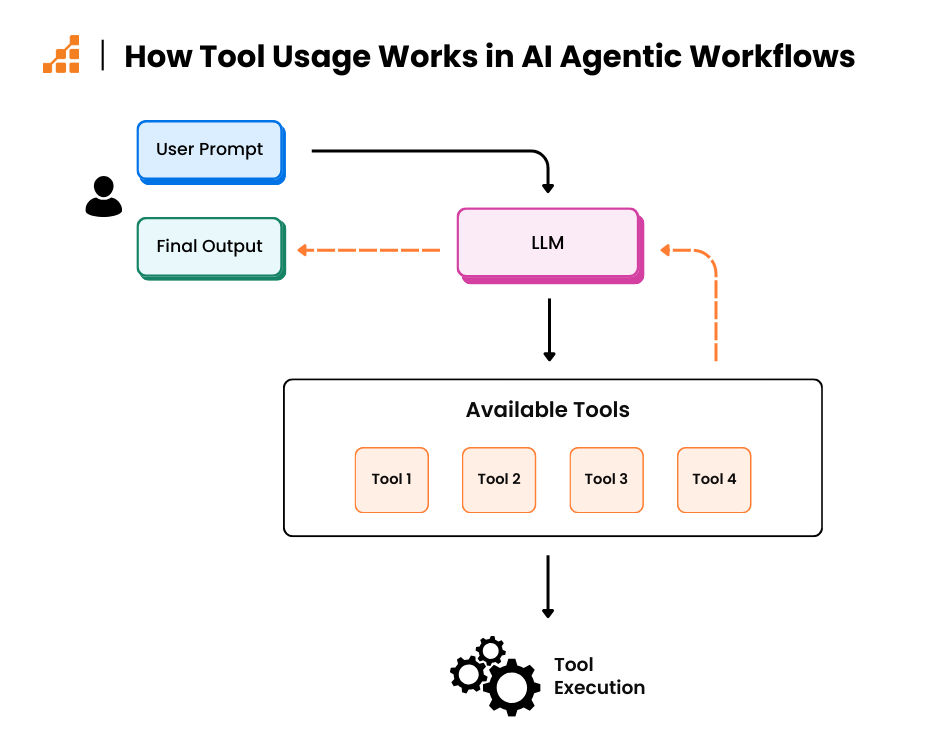
I think it’s important to clarify that the LLM isn’t actually running the tool. Instead, it merely decides which tool should be called for the identified purpose and what parameters need to be provided for successful execution.
Let’s visualize this using our earlier travel workflow example. Our agent can integrate directly with real-time weather APIs, which is then factored into its recommendations. Taking it further, we could also integrate our agent with ticketing platforms to suggest local attractions, concerts, and events, and even purchase tickets on behalf of the user.
Design Pattern 3: Planning
I find this pattern easiest to explain using a concept I often talk about with my dev team: open-scope tasks and closed-scope tasks.
Open-Scope vs Closed-Scope Tasks
Closed-scope tasks are those where we know exactly what needs to be done to complete them. There’s not much to think about—it’s basically carrying out what’s being asked.
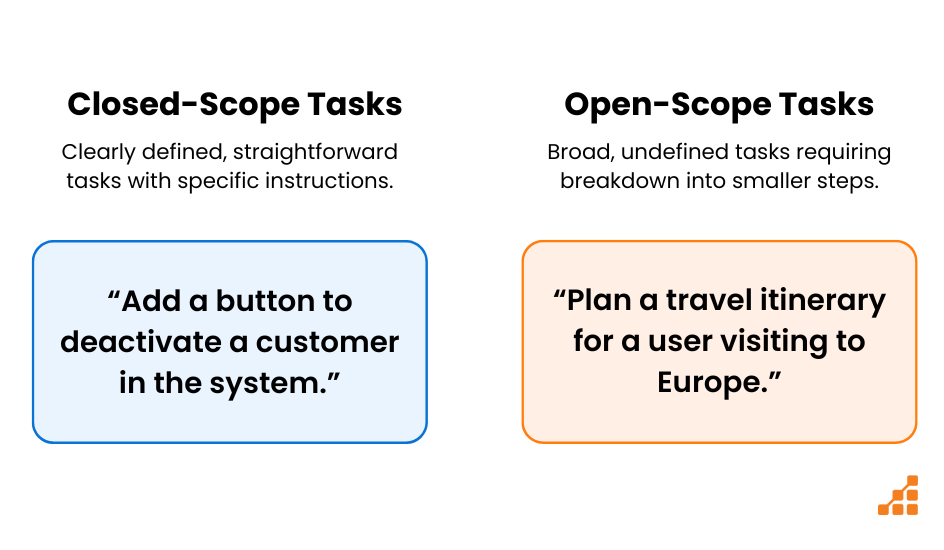
To visualize a closed-scope task, imagine your dev lead gives you the following assignment:
- Add a column to the database to store a user’s email address.
Assuming you’re familiar with the system, you probably know how to implement what’s being asked. Straight to the point, no beating around the bush.
OK, now compare that with being given this open-scope task:
- Plan a complete travel itinerary for a user visiting Europe.
Feel the difference? Nothing is defined, and we need to break down this open-scope task into several closed-scope tasks to reach a good outcome.
Okay, so what does this have to do with agentic workflows? Because this power to transform is exactly what Planning enables.
How Planning Enables AI Agents to Complete Complex Tasks
Instead of having the LLM try to handle a request of this sort in a direct and linear way, planning allows your agent to organize itself and break the final goal into smaller tasks.
In our earlier examples, a planning agent would probably break the open-scope task into the following steps:
- Identify the user’s preferences (e.g., budget, interests, travel dates).
- Research popular destinations within the user’s constraints.
- Use weather data to recommend optimal locations for the travel period.
- Define transportation options between destinations (e.g., flights, trains, car rentals).
- Suggest accommodations based on proximity, budget, and reviews.
- Plan activities and attractions for each destination, integrating with booking systems when necessary.
….and so on.
This approach significantly improves precision by enabling the AI to map out an effective plan and tackle small, incremental tasks. Patterns like ReAct enhance this further by allowing the agent to alternate between problem-solving and task execution, resulting in more flexible and realistic plans.
Design Pattern 4: Multi-Agent Collaboration
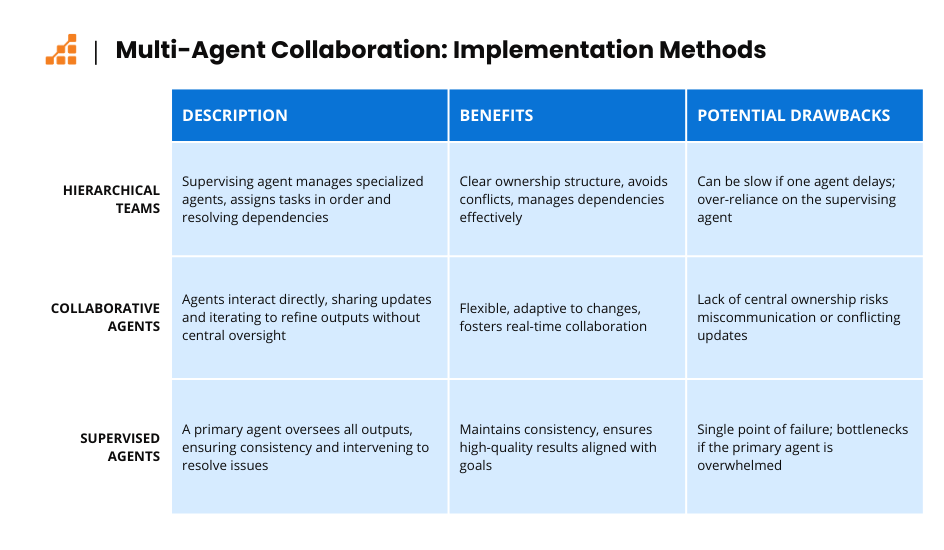
The multi-agent pattern relies on the collaboration of specialized agents, each handling a specific task, much like a company where different departments work together under the guidance of a project manager. Combined with the planning design pattern, this approach allows complex workflows to be divided into manageable, well-defined tasks, with each agent focusing on its own area of expertise.
There are a few ways to implement the multi-agent collaboration design pattern: hierarchical teams, collaborative agents, and supervised agents.
Collaborative Agents
Here, agents communicate directly with each other in a decentralized manner, dynamically collaborating to refine the final output. Each agent independently shares updates and responds to the inputs of others, creating an iterative process.
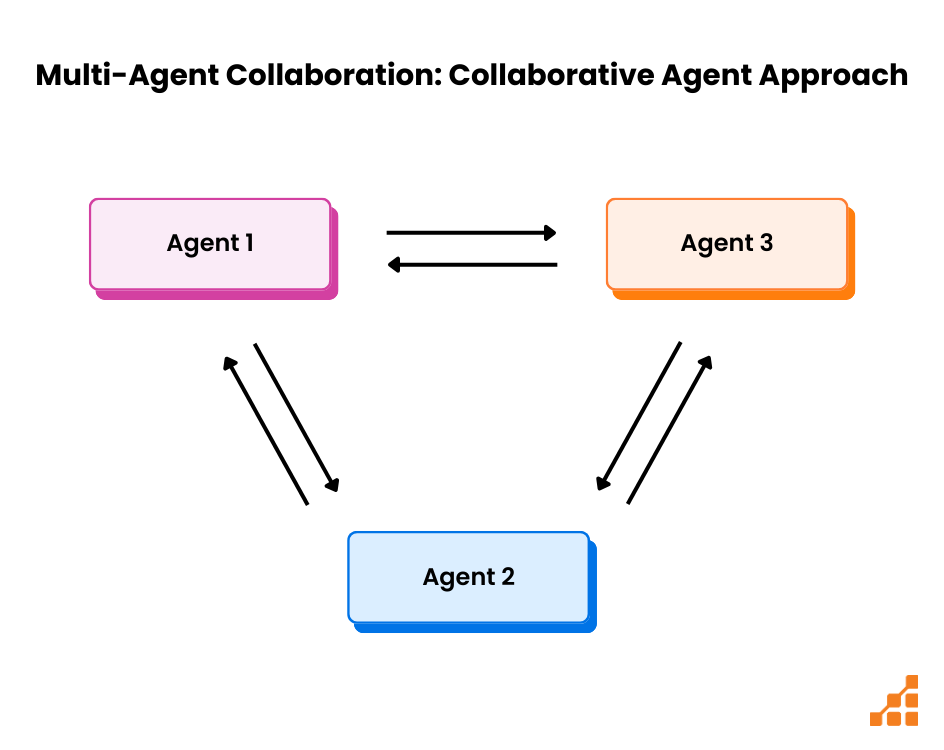
For instance, the itinerary agent might send a draft to the weather agent, which proposes changes based on conditions, and the ticket agent adjusts its bookings accordingly.
Supervised Agents
In this approach a primary agent oversees all operations, acting as a quality controller. It validates the work done by the specialized agents, ensures decisions align with overarching goals, and intervenes when necessary to maintain consistency and quality.
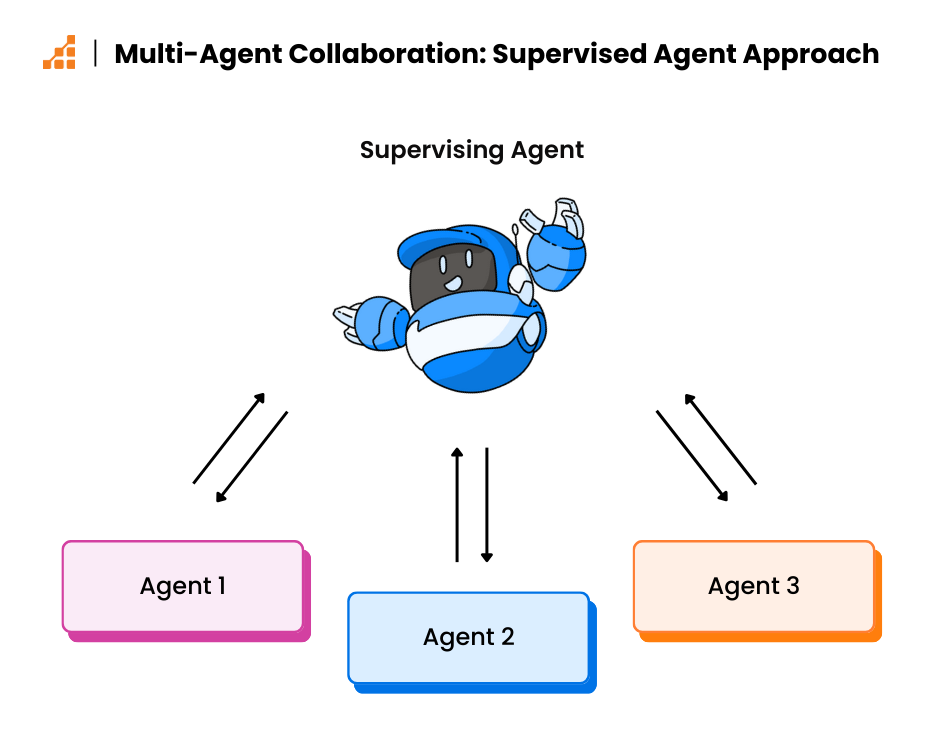
In the travel example, the primary agent would review the itinerary, weather adjustments, and bookings before presenting the final plan to the user.
Hierarchical Teams
Finally, in this approach, a supervising agent acts as a manager, coordinating the specialized agents. The supervising agent assigns tasks, ensures they are executed in the correct sequence, and resolves dependencies between agents. This approach allows for more complex control flows – it’s like a system with a supervisor of supervisors.

There are some similarities between hierarchical teams and supervised agents. The key difference is that hierarchical teams focus on managing tasks, ensuring each agent completes their specific task in a coordinated sequence – kind of like a Project Manager assigning work to different team members. In contrast, supervised agents emphasize quality control, with one primary agent overseeing the entire process, validating outputs, and ensuring everything aligns with the final goal.
In our travel workflow example, the supervising agent might first instruct the itinerary agent to draft a plan, then pass it to the weather agent for validation, and finally delegate booking to the ticket agent.
By dividing responsibilities among specialized agents, the multi-agent pattern allows the system to operate more efficiently and deliver tailored, high-quality results. This approach also mirrors the coordination required in a real company, with each “department” (agent) contributing to the end goal.
These design patterns—reflection, tool usage, planning, and multi-agent collaboration—form the building blocks of effective agentic workflows. However, for these workflows to deliver truly tailored and dynamic results, they need access to both internal and external data sources. This brings us to another critical element: Retrieval-Augmented Generation (RAG).
Retrieval-Augmented Generation (RAG) and AI Agentic Workflows
LLMs often seem like they know everything about the world. Whether it’s caring for a guinea pig or explaining brain surgery, they can provide surprisingly reliable responses most of the time.
However, when you need a tool to work intelligently within your company—not just answer general questions—a critical challenge arises: how much can AI actually know about your company?
I don’t mean publicly available data, like headcount or industry. I’m talking about internal details, like how many tasks your IT team completed last month, how much was spent on salaries this year, or even individual employee performance metrics.
No LLM can inherently provide this information because it’s not public, part of the training data, and in some cases, isn’t even stored in a place that agentic AI can access it.As you explore the full potential of agentic workflows, the need for precise, context-rich answers becomes essential. This is where Retrieval-Augmented Generation (RAG) comes in—a technique that combines external information retrieval with text generation to give agents real-time, relevant data for grounding their responses.
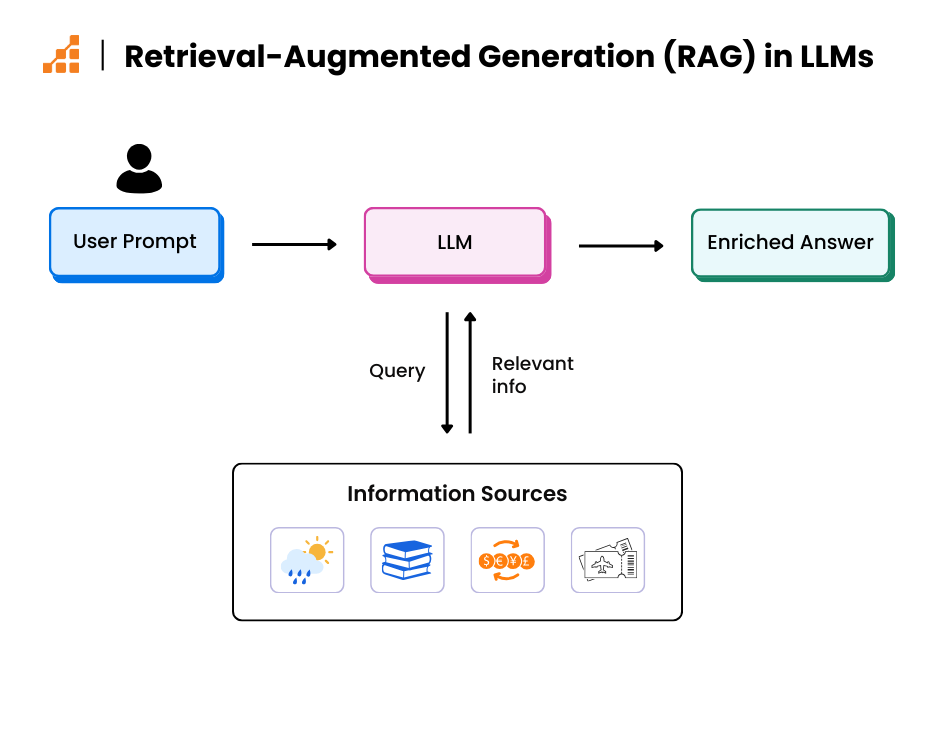
How RAG fits in
RAG is a critical layer in agentic workflows, adding intelligence and context to decision-making. While agents handle iterative processes and make autonomous decisions, RAG ensures the information they rely on is accurate, up-to-date, and tailored to the task.
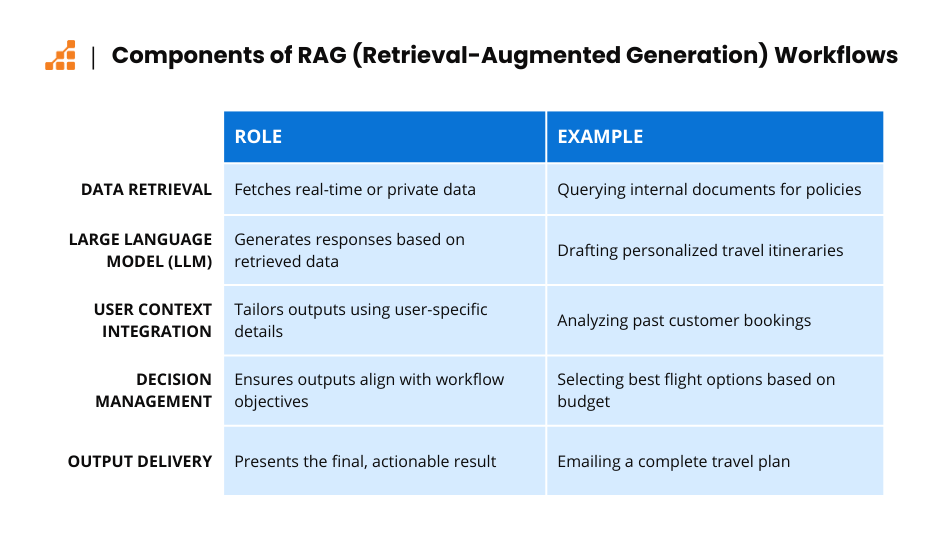
Here are some examples to illustrate how RAG works:
- Real-time data retrieval: Imagine a travel agent building an itinerary. By using RAG, it can pull in real-time data like flight availability, hotel prices, or local events. This ensures the suggestions aren’t just accurate but also aligned with the traveler’s preferences.
- Generation based on internal documentation: An agent can tap into internal resources, like curated travel guides, company policies, or feedback from previous customers. This allows it to make recommendations based on reliable, experience-backed information that’s unique to the agency.
- Responses using private context: For returning customers, the agent can analyze past bookings, preferences, and loyalty program details. This makes it possible to craft highly tailored itineraries that reflect the traveler’s unique history and interests.
RAG provides a powerful way to ground agents in real-time, context-rich data. However, it’s still just one part of a larger system. Building a complete agentic workflow involves integrating RAG with other foundational components, from serving LLMs to managing agent states. Let’s explore the key pillars that form the backbone of agentic workflows.
Building an Agentic Workflow: Tech Stack and Key Components
Unlike basic LLM chatbots, AI agents and agentic workflows require a more sophisticated architecture, since the process can involve different LLMs, tool usage, memory, and so on.
There are many ways to build an agentic workflow. I want to mention this, because the ecosystem is evolving so fast and new tools are emerging frequently, and it’s likely that there will be new approaches in just a few months. I hope that what I cover below is a general overview of the types of tools and some examples you can use.
To begin our journey, we first need to understand the key components of creating an agentic workflow. The list below is not following a specific order of importance, each pillar may be essential for your project, it just depends on what you want to achieve.
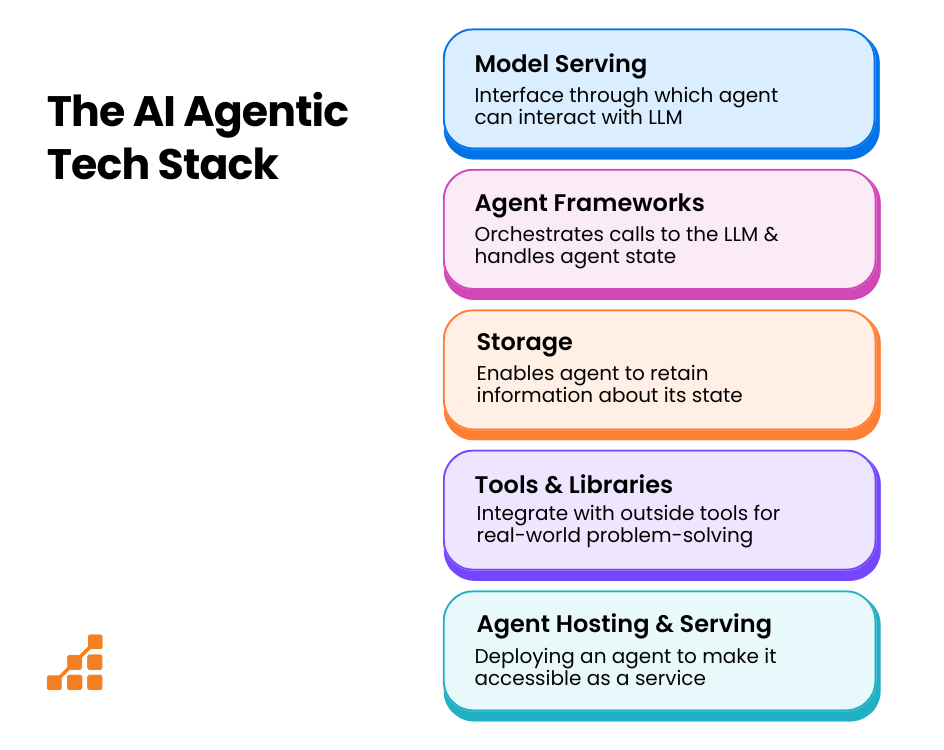
Pillar 1: Model Serving
The heart of our AI agents is the LLM. To use an LLM, the model must be available for use, meaning it needs to be served in a way that you can call it. This typically occurs through paid APIs like OpenAI or Anthropic, both of which offer different LLMs and pricing tiers based on the model’s capability.
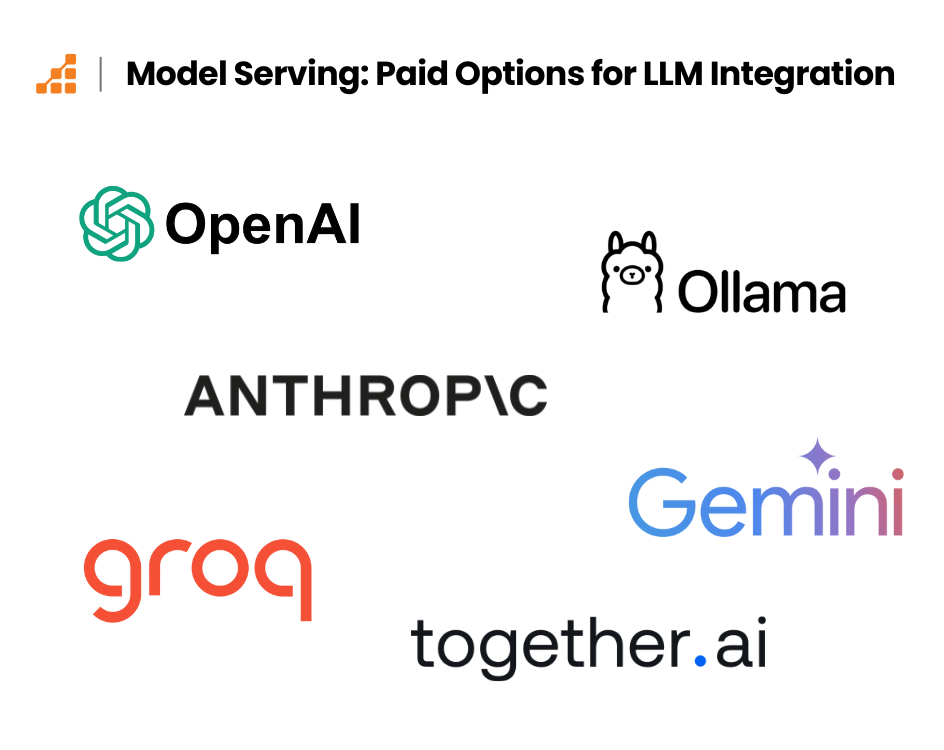
This pillar is essential and common to all agents, regardless of which service you choose or even if you choose to host your own LLM. The main point is that you need some interface through which your agent can interact with the model.
Pillar 2: Agent Frameworks
Agent frameworks essentially handle two main functions: orchestrating calls to the LLMs and managing the agent’s state.
Naturally, each framework has its own approach and differs in how it accomplishes its role. There’s no one “best” framework; so when building your agent, it’s worth taking time to study the available options thoroughly to make the best choice for your project’s needs.
A few well-known examples of agent frameworks include: LangGraph, Letta, AutoGen, CrewAI, and Microsoft’s Semantic Kernel.
Pillar 3: Storage
Storage is an essential pillar if your agent needs to retain information about its state, such as conversation history, memories, or even external data sources used for RAG (Retrieval-Augmented Generation).
There are multiple options to make developing this part of your agent easier, ranging from paid services—like Pinecone, a fully managed cloud vector database—to open-source solutions such as Chroma, Weaviate, and Milvus.
Pillar 4: Tools & Libraries
If you plan to enhance your AI agent’s capabilities to solve real-world problems, you’ll likely need to integrate tools and implement the Tool Usage pattern in your agentic workflow.
Fortunately, there are libraries that come with dozens of tools ready to go, making development much faster and simpler. I won’t list them all here, but here are a few examples so you can see the range of tools already available: Composio, BrowserBase, Exa, and LangChain Tools.

Pillar 5: Agent Hosting and Serving
Most agents that are created end up existing only within the code context in which they were built. Similar to how the OpenAI API is widely used to facilitate communication between systems and LLMs, the idea here is to make your agent accessible as a service.
This step is more complex. Deploying an agent requires extra care and attention, involving elements that can be challenging to manage, like memory and securely executing tools.
Fortunately, there are some solutions that already make this path a bit easier, including:
- Mistral AI Agents API
- Amazon Bedrock Agents
- Letta
- LangGraph
Building a complete agentic workflow is a complex undertaking that demands a deep understanding of various tools and processes. While it can be challenging, the constantly evolving AI ecosystem offers hope—with new tools and frameworks emerging regularly to simplify the process, making it more flexible, efficient, and accessible for teams of all expertise levels.
Challenges and Considerations of AI Agentic Workflows
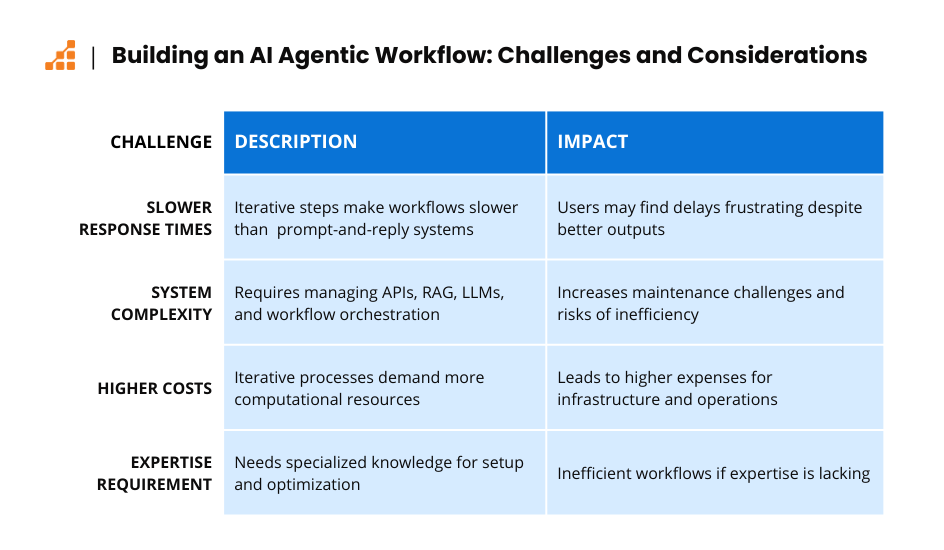
We can’t ignore the fact that while agentic workflows offer numerous advantages, they also introduce challenges that disrupt the way people have quickly grown used to interacting with AI. Even with superior results, these workflows require a shift in mindset and an investment in infrastructure to overcome specific problems.
AI Agents May Be Slower Than Prompt-and-Reply Methods
In a more traditional AI interaction, responses are delivered almost instantly. You ask a question, and the answer appears right away. With agentic workflows, that’s not always the case. Their iterative approach means solutions can take more time to develop, as they involve multiple steps.
To compare:
- ChatGPT: A single prompt is entered and the system generates an immediate response.
- Agentic Workflow: The agent executes several steps—retrieving data, reflecting on outcomes, adjusting, and refining outputs—until it reaches the ideal solution.
Implementation and Management is More Complex
Implementing agentic workflows involves specific technical and logistical challenges that must be carefully managed, like computational costs, tools, infrastructure and the workflow orchestration itself. Executing tasks in multiple steps, with autonomous decision-making and constant refinement, increases the overall complexity of the system. The agents must be thoughtfully designed, with a flow that is clear and well optimized, so that each agent knows exactly what steps to follow and balance iteration and efficiency. There are literally a lot of moving parts involved, from APIs to RAG and LLMs, all of them working together.
Successfully implementing agentic workflows requires technical expertise, careful system design, and a focus on resource management.
The Future of Agentic Workflows: What’s Next?
Agentic workflows represent one of the most promising pillars for the future of artificial intelligence. This approach has the potential to transform how we interact with AI, driving the next wave of innovation through systems that are increasingly autonomous and intelligent.
It’s hard to say exactly what the next step in AI evolution will be, but one thing is clear to me: AI agents are not just a passing fad. They mark a turning point in AI history, a moment that will guide how this technology is used in the future.
Transformative Potential
Agentic workflows are a very good way to create significant new “AI moments” for end-users – experiences that are not just technologically impressive, but that solve real-world problems in innovative ways.
In the near future, systems based on agentic workflows will likely be able to deeply understand individual needs and adapt in real time. Imagine a personal assistant that not only organizes your schedule, but also anticipates important appointments, makes reservations, and adjusts its decisions based on your lifestyle. These advancements have the potential to transform entire industries, making processes more efficient, accessible, and adaptable to a constantly changing world.
Shaping AI’s Next Wave
Agentic workflows will be central to the next evolution of AI, especially as we strive for systems capable of reasoning, reflecting, and continuously improving themselves. This new generation of AI won’t just react to what’s asked but will be able to achieve true autonomy.
Systems will become increasingly capable of taking complex decisions, planning actions, and learning from outcomes. This will allow agents to operate independently, even in dynamic and unpredictable environments.
I also think that In the future, we’ll see entire ecosystems of agents working together. I like to think of it as “micro services” for AI. Maybe that analogy isn’t the best, but it makes some sense to me.
And perhaps the most significant thing will be the ability of agentic workflows to improve themselves. As they gather data, test hypotheses, and iterate, these systems will become progressively more efficient and intelligent, reducing the need for human reprogramming.
Agentic workflows have the potential to create a future where AI doesn’t just augment human work but enhances our ability to innovate, solve problems, and transform the world around us.