
The Rise of the Vibe-Code Fixer

AI copilots and low-code tools have made it possible to go from idea to “working product” in a weekend. Designers, founders, and operations leaders can now assemble functional apps with a mix of prompts, templates, and copy-pasted snippets. The result is a new norm in many teams: prototypes that look polished, get stakeholder buy-in, and quietly slide into production long before they are truly ready.
This article digs into that pattern, which we’ll call vibe coding: fast, intuition-driven building powered by AI and low-/no-code platforms. We will look at why it has exploded, where it breaks down, and why a new kind of engineer – the Vibe-Code Fixer – is becoming essential.
By the end, you should have a clear picture of:
- What vibe coding is and why it is here to stay
- The common failure modes when prototypes outgrow their foundations
- How Vibe-Code Fixers stabilize these systems without killing speed
- Why this role is valuable for businesses and a strong career path for senior engineers
Table Of Contents
A weekend prototype that “works,” but is held together with tape
The first version of the conversational AI assistant I built came together faster than I expected. I started on a Friday night, and by Sunday afternoon, I had something that looked polished enough to demo: smooth message flow, decent intent detection, even a tiny React interface slapped together just to make it feel “real.”
If you opened the repo, though, it told a very different story. Functions stitched together at 1 a.m. Logic was duplicated because it was quicker than reorganizing it. No tests. No structure. Lots of wishful thinking.
At one point, the core message handler literally looked like this:
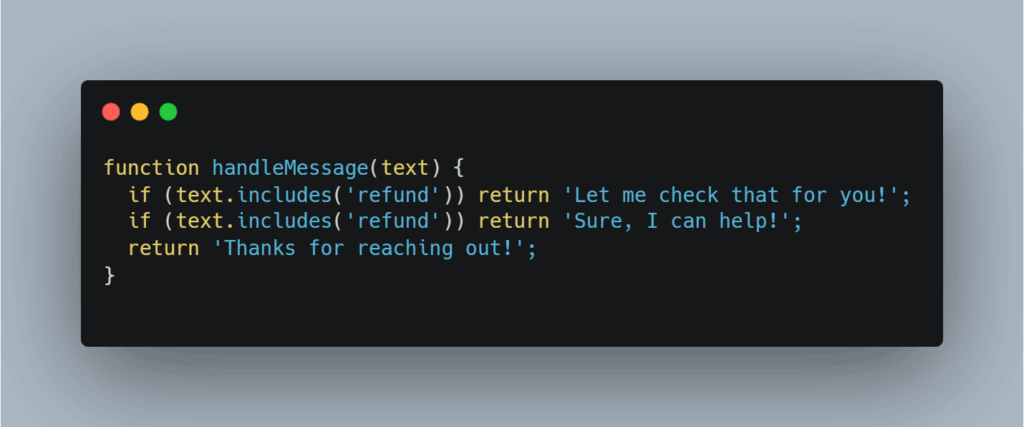
Seeing this now is funny, but during the prototype rush, it felt normal. This kind of “good enough for now” code is how many ideas begin today.
Vibe coding: How ideas get built today
This style of building has exploded because AI copilots and low-code/no-code tools make it incredibly easy to go from idea to something that looks like a product in hours. I’ve watched designers generate functional screens using ChatGPT, Project Managers hack together internal tools with Retool, and founders build onboarding flows using nothing but model suggestions and intuition.
It’s quick, scrappy, experimental — and very often, surprisingly effective. This is vibe coding: development driven more by momentum and creativity than by traditional structure or best practices.
Reports back this up:
- GitHub found that 92% of developers already rely on AI tools at work.
- McKinsey highlights that AI drastically accelerates the prototyping phase of software.
- Gartner forecasts massive growth in low-code adoption across enterprises.
We’re witnessing a shift not in how developers code, but in who codes and how fast a product can appear out of thin air.
The missing piece: people who can turn hacks into systems
But there’s a moment every vibe-coded project eventually hits that awkward transition where the demo impresses stakeholders, yet nobody feels comfortable putting it in front of real customers.
That’s the gap where a new type of engineer has quietly become essential:
The Vibe-Code Fixer.
Fixers are the ones who pick up these scrappy prototypes and turn them into stable, trustworthy products. They don’t kill the energy that made the idea possible. They channel it into something sustainable, preserving the speed while adding the structure the project was missing.
In many modern teams, this role is no longer “nice to have.”
It’s becoming foundational.
The Vibe-Coding Boom
If the last decade was defined by frameworks and cloud tooling, this one is shaping up to be defined by velocity. Vibe coding is the clearest expression of that shift.
Instead of starting with architecture diagrams or RFCs, someone with an idea opens an AI model, describes what they want, and within minutes has something that looks like a working feature.
It’s not formal. It’s not architectural. And it’s definitely not documented. But it runs.
For many teams, that’s enough to move an idea forward and get early feedback.
AI lowered the barrier so dramatically that building has become conversational. Instead of “write a function that…” many prototypes now start with “Hey, can you generate something that handles this?” The result is a new class of lightweight, intuition-driven software made by both developers and non-developers.
Real-world examples of vibe coding in action
A few patterns show up again and again.
- Non-technical founder ships a functional demo with an AI copilot.
A founder I coached built an entire onboarding flow using ChatGPT prompts and snippets pasted into a Bootstrap template. It was not scalable, but it was persuasive enough to close a partnership conversation. That validation justified investing in a real implementation. - Ops lead assembles an internal tool with a low-code builder.
At a logistics company, an operations manager created a “delivery issue resolver” in Retool over a weekend. It integrated with Slack, filtered shipments, and triggered status updates. It began as a temporary workaround and quietly became the team’s most-used internal tool before engineering ever touched it.
These are no longer edge cases. They are becoming the norm.
As this wave grows, the need for engineers who can stabilize these creations grows right along with it.
Where the Cracks Show
Vibe-coded prototypes often look impressive on the surface, they demo well, they respond fast, and they give everyone a sense that the idea is “basically ready.” But the moment these systems are asked to handle real traffic, real data, or real reliability requirements, the weak points become impossible to ignore.
Below are the most common cracks that appear, along with situations I’ve seen firsthand across projects.
Security: exposed secrets, permissive auth, vulnerable dependencies.
Security is usually the first and loudest problem. Vibe-coded prototypes are often built under pressure, so best practices take a back seat to speed. It’s common to find API keys in plaintext, admin endpoints left unprotected, or dependencies pulled straight from blog posts without verifying versions or risks.
On the first version of my AI assistant, the OpenAI API key was literally hardcoded in the repo:
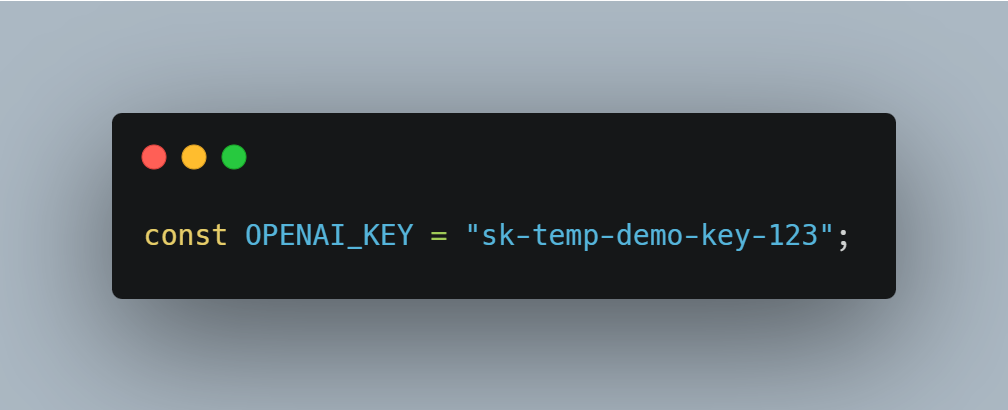
We didn’t notice until someone outside the project accidentally used it while testing something unrelated, an embarrassing reminder that “temporary” shortcuts rarely stay temporary.
I’ve since seen similar patterns in startups and large organizations alike. One team had Firebase admin keys committed into the front end. Another had a “debug mode” endpoint that granted full database access with no authentication. These things feel small when the prototype is new, but they become major liabilities fast.
Quality: missing tests, zero observability, copy-paste bugs.
Quality issues emerge the moment people try to iterate. Without tests or guardrails, even tiny changes can break things in unpredictable ways. One internal prototype I reviewed had the same business rule duplicated across four separate files, each slightly different, each patched at different times.
Fixing a bug meant remembering everywhere it lived. Sometimes someone forgot, and the bug would “mysteriously” reappear.
Observability is another blind spot. Log statements are inconsistent or missing, making debugging feel like forensic science. If something goes wrong, there’s no clear cause — just symptoms. Teams end up relying on guesswork and Slack messages like “Anyone know why the bot is replying twice today?”
These quality gaps don’t necessarily reflect incompetence. They reflect how fast the prototype needed to be created.
Architecture: tight coupling, and accidental production systems
Vibe-coded systems tend to evolve organically. Without upfront planning, features get bolted on wherever there’s space, creating tightly coupled logic that’s difficult to extend. Data models feel improvised. Deployments are often manual, because creating actual environments “can wait until later.”
One biotech startup I visited had a chatbot that routed every single conversation through a single 900-line function. It was never meant to survive past the first demo — but the business started relying on it anyway.
This is common: prototypes accidentally become production systems because they work “well enough” and no one has time to rebuild them.
The true cost of ignoring the cracks
When those shortcuts are left in place, the costs compound.
- Outages and incidents.
Under real traffic, fragile logic fails. One retail team I worked with had daily outages during peak hours because their internal tool ran an expensive, unindexed query on every message. - Expensive rewrites and delays.
Stabilizing a rushed prototype often takes longer and costs more than building a solid version from the start. Unfortunately, rewrites usually happen under intense pressure, which increases risk and stress. - Compliance and reputational risk.
Once a prototype handles real customer data, improvised data flows and missing audit trails become serious problems. I have seen teams scramble during reviews because no one could confidently explain where certain data lived or who had access to it.
None of this happens because teams are careless. It happens because prototypes are built for speed, not longevity. As soon as they gain traction, the shortcuts begin to cost real time, money, and credibility.
This is exactly why the Vibe-Code Fixer role is emerging: someone who can step in before things fall apart and guide the system from “scrappy prototype” to “product that will not set off alarms.”
Rise of the Vibe-Code Fixer
As vibe-coded prototypes spread across teams, a new kind of engineer has quietly become essential: the person who can take a fragile, fast-moving idea and turn it into something durable without killing its momentum. That’s the Vibe-Code Fixer — part triage specialist, part translator, part product-minded engineer who thrives at the intersection of speed and structure.
Below is what defines this emerging role.
Role overview: from chaotic demo to stable product
Fixers are the people who step into the messy middle, after a prototype proves its value, but before it’s safe to call it a product. They don’t rewrite everything from scratch or insist on heavy processes. Instead, they stabilize what already exists.
When I joined the early phase of the AI assistant project, this was exactly the situation. The prototype behaved well enough to show customers, but underneath it was fragile. My job wasn’t to slow things down, it was to make sure the team could keep moving without breaking everything every time they released a feature.
Fixers transform momentum into something sustainable.
Core skills of a Vibe-Code Fixer
Most fixers share a common skill set.
1. Rapid triage and risk prioritization
Fixers are calm in chaos. They open a vibe-coded repo, scan the structure, and quickly identify real risks: exposed secrets, fragile flows, unclear data paths. They separate urgent issues from annoyances so teams can focus on what matters.
2. Refactoring, test design, and dependency hygiene
Fixers bring just enough discipline to give the prototype a backbone. They reorganize logic, add lightweight tests, and remove the most dangerous shortcuts. The goal is not perfection; it is stability.
In the AI assistant, we replaced a tangled intent-detection block with a simple table-driven approach.
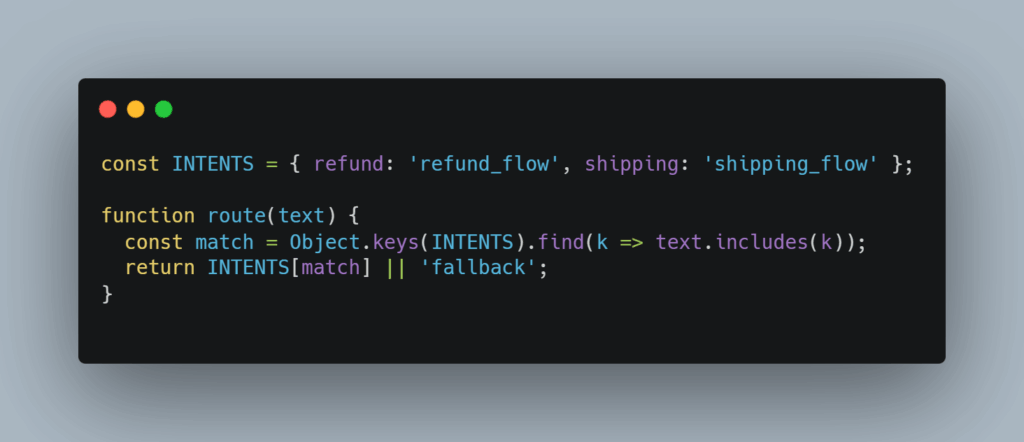
A small change, but it eliminated most of the random behavior during early demos.
3. Clear communication with non-technical creators
Many vibe-coded systems are built by founders, designers, or operations teams. Fixers explain issues without jargon and frame risk in business terms:
- “Here is what might break” becomes
- “Here is the customer impact if we do not fix this.”
That translation turns anxiety into alignment, and alignment into progress.
Why Businesses Need Them
Vibe coding has made it incredibly easy for teams to get ideas off the ground, but it’s also created a widening gap between what looks ready and what is actually ready. That gap is exactly where Vibe-Code Fixers deliver outsized value.
Below are the reasons businesses increasingly rely on them, illustrated with real situations I’ve seen across different companies.
Faster idea validation without compounding technical debt.
Most teams today move quickly because they have to, competitors ship fast, internal stakeholders expect results, and opportunities disappear if you wait too long. Vibe coding works beautifully for that early momentum, but it also produces fragile foundations that slow teams down the moment they try to extend the prototype.
The advantage of having a fixer is that teams can keep that fast-moving energy without getting buried under tech debt.
In the AI assistant project, adding just a minimal structure to the prototype meant we could safely onboard early testers within days instead of months, which helped the team validate the idea long before any “real build” would have been finished.
Fixers let you move fast now without paying interest later.
Stronger collaboration between visionaries and engineers.
Many vibe-coded prototypes aren’t built by engineers. They’re created by founders sketching ideas late at night, by designers who want something interactive, or by ops teams who simply need a solution today.
Fixers bridge that creative world and the engineering world.
They understand why choices were made (“we needed something to show the client on Monday”), and they translate those choices into stable, maintainable systems.
One of the smoothest collaborations I saw was with a non-technical founder who built the first version of his onboarding flow using ChatGPT. Once we paired up, conversations shifted from fear (“What breaks if we change this?”) to momentum (“What should we build next?”). The entire team got faster because they trusted the system again.
Fixers strengthen collaboration by turning scrappiness into progress.
Lower long-term maintenance and support costs.
Nothing drains a team faster than constantly fighting fires. And vibe-coded prototypes, once they become part of daily operations, tend to create exactly that: recurring bugs, unpredictable behavior, and fragile logic that breaks whenever someone tweaks a feature.
Fixers dramatically reduce this hidden cost.
I once helped a team whose internal tool required nearly a full workday each week just to keep functioning. After a short stability pass, cleaning up core flows and adding basic tests, that maintenance time dropped from 12 hours a week to 2.
The ROI of stabilization is rarely glamorous, but it’s very real.
Fixers save teams time, money, and morale.
Better security posture and compliance readiness
The moment a prototype touches real customer data, the stakes change. What worked fine in a demo suddenly raises questions about privacy, access control, auditability, and compliance requirements, things vibe-coded prototypes aren’t built for.
Fixers help teams avoid accidental risks.
At one company, simply securing API keys, clarifying where data was stored, and documenting access rules allowed a previously blocked project to pass a compliance review that had been delayed for months.
These aren’t massive architectural efforts; they’re targeted, high-impact improvements that make the product trustworthy.
Fixers help businesses move quickly without exposing themselves to avoidable risk.
In short, Vibe-Code Fixers allow teams to enjoy the speed of AI-driven building and the reliability of mature engineering, a combination that’s becoming essential as prototypes increasingly turn into products overnight.
Practical Playbook
Fixing a vibe-coded prototype rarely means rebuilding it from scratch. Most of the time, the value comes from adding just enough structure, clarity, and safety to keep momentum going. Over the past few years, I’ve found myself repeating the same approach across different teams, from scrappy startups to large enterprises experimenting with AI.
Here’s the playbook that consistently works.
Evaluate (Audit)
Before touching anything, fixers start by understanding what they’ve inherited. No assumptions, no judgments — just a clear picture.
Code & dependency inventory; threat model.
The first step is figuring out what the prototype depends on — libraries, external APIs, random scripts, hidden glue code. In my AI assistant project, this step alone unearthed an outdated dependency and a forgotten environment variable sitting in a Google Doc.
Test coverage and critical-path mapping.
Even when a project has zero tests, there’s always a “critical path” — the flow that absolutely must not break. Mapping that path gives teams clarity. When I diagrammed the assistant’s “message → intent → response” sequence, the team instantly understood where the real fragility lived.
Infra, data flows, and secrets review.
Vibe-coded systems often accumulate shadow infrastructure: ad-hoc spreadsheets, personal AWS buckets, local scripts someone wrote at midnight. Surfacing these hidden pieces prevents scary surprises later.
The audit’s goal: Clarity, not perfection.
Refactor & Harden
This is where the prototype becomes more predictable without slowing down progress.
Modularize hot spots; remove dead code
Fixers target the messiest, most frequently touched parts first. In one prototype, simply extracting a 200-line block of message routing logic into its own small module removed half of the recurring bugs.
Add unit/integration tests; enforce linters
The goal isn’t 100% coverage — it’s confidence.
Even a few well-placed tests can prevent regressions during frantic shipping cycles.
Introduce observability (logs/metrics/traces)
This might be the highest-ROI step in the entire process.
One team I worked with went from “we have no idea why it’s failing” to “oh, it’s that API call again” in a single day, just by adding structured logs.
Performance tuning and cost checks
Vibe-coded systems often have low-hanging fruit: duplicate queries, unbounded loops, unnecessary API calls. Removing these hotspots can turn a shaky demo into a system that feels genuinely stable.
The refactor’s goal:
Stability without disruption.
Document just enough
Good documentation doesn’t need to be long, it needs to be useful. Focus on three artifacts:
- README
How to run the project, what it does, and where the key components live. - Architecture diagram
Even a simple “boxes and arrows” diagram that covers services, data stores, and external integrations is invaluable for onboarding. - Runbooks and basic reliability goals
Short guides like “If X breaks, check Y” keep incidents from becoming all-hands emergencies. A few simple service-level indicators (latency, error rate, availability) anchor conversations about reliability.
The goal of documentation is to give future contributors a map, not a textbook.
Deployment
A prototype shouldn’t require heroics to deploy.
CI/CD, environments, automated checks.
Even a minimal pipeline makes a huge difference. Something as small as:
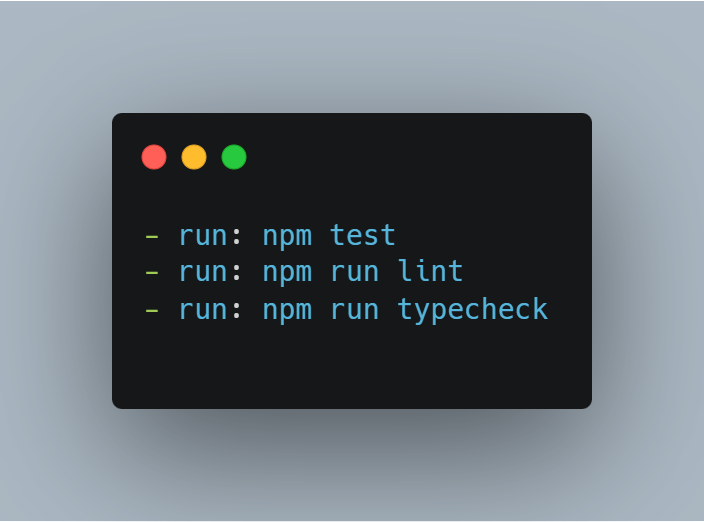
can prevent a surprising amount of chaos.
Blue-green/rollback strategy and access controls.
Teams relax when they know they can deploy safely — and roll back instantly.
Adding simple environment separation (dev/staging/prod) brings order to what was previously guesswork.
The deployment’s goal:
Make shipping feel routine, not risky.
Use small, targeted tools
Fixers do not rely on a massive platform to stabilize prototypes. They use a small set of focused tools well:
- AI copilots for refactors, test scaffolding, and documentation
- Security scanners for obvious vulnerabilities
- Testing frameworks like Jest, Vitest, or Playwright
- Lightweight observability stacks for logs and metrics
- Infrastructure-as-code or scripts for reproducible environments
A handful of well-chosen tools usually beat a large, complex stack.
Engage the team the right way
Technical work is only half the job. How you engage matters.
- Translate risk into business impact.
“We need to refactor this” does not land as clearly as “If we do not touch this, we will keep having outages during peak hours.” - Prioritize quick wins and show before/after metrics.
Early improvements to error rates, response times, or deployment speed build trust fast. - Set a clear “definition of done” for stabilization.
Criteria such as “critical path tested, secrets secured, deployments safe” prevent endless polishing and help everyone understand when the prototype has matured enough.
The engagement goal is simple: show value early, and keep showing it as you go.
Conclusion
Vibe coding has changed the starting point of modern software. Ideas no longer wait for a roadmap slot or a full engineering team, they’re sketched, prompted, generated, and assembled into something functional in a fraction of the time it once took. That speed is powerful. It’s enabling founders to validate concepts earlier, teams to experiment more freely, and companies to uncover opportunities they might have otherwise missed.
But speed alone can’t carry a product into the real world. Eventually, every prototype reaches the moment when someone asks: “Can we actually rely on this?”
That’s where the Vibe-Code Fixer steps in.
Fixers are the engineers who make sure promising prototypes survive contact with users, traffic, data, and the messy realities of production. They protect what made the prototype special while reinforcing the parts that need stability. And in a world where prototypes now appear overnight, their role is becoming less of a niche and more of a necessity.
The first version of the conversational AI assistant I built was fragile, improvised, and full of shortcuts, but it also proved the idea. It only became a real product because someone stepped in to guide it through that vulnerable middle stage. More and more teams are finding themselves in that same position: the prototype is working, people love it, and now it needs help growing up.
The gap between imagination and implementation has never been smaller. But the gap between prototype and production still needs a steady hand.
If there’s ever been a moment to step into that role, it’s now.